
The development of 5G in Africa is likely to follow a different path from that of more mature mobile markets. While countries such as China, South Korea and the United States moved rapidly toward large-scale 5G adoption, many African markets are still expanding 4G coverage and increasing mobile broadband adoption.
This does not mean that Africa will miss the opportunities created by 5G. Instead, 4G and 5G are expected to coexist for many years, with operators introducing 5G where there is a clear business case and strong demand for higher-capacity connectivity.
Industry research published around this period suggested that Africa could have more than 340 million 5G connections by 2030, representing around one fifth of total mobile connections in the region. At the same time, continued 4G expansion would remain an important part of Africa's connectivity development. GSMA
Unlike markets where 4G adoption had already reached high levels before the introduction of 5G, many African countries still had considerable room for further 4G growth.
For operators, this means that network investment cannot focus exclusively on 5G. Expanding 4G coverage, improving network capacity and making mobile broadband more affordable will continue to be important.
Initial 5G deployments are therefore likely to concentrate on major cities, business districts, industrial locations and other areas where demand can justify the additional network investment.
Over time, operators can expand 5G coverage as device costs decline, spectrum becomes available and demand for higher-speed mobile broadband increases.
Fixed Wireless Access (FWA) is particularly relevant to the African 5G market.
In many areas, fixed-line broadband infrastructure is limited or expensive to deploy. Building fiber connections directly to every home or business can require significant investment, especially across large geographic areas or locations with relatively low population density.
5G FWA provides another way to deliver broadband connectivity.
Instead of requiring a traditional wired connection, a customer can use a 5G CPE or 5G router to receive the operator's mobile network signal and provide Internet access to devices inside a home, office or business.
This makes FWA an attractive option for operators looking to expand broadband services without relying entirely on new fixed-line infrastructure.
GSMA research at the time identified FWA as one of the important 5G opportunities in Africa, and early commercial 5G deployments in the region were already incorporating FWA services. GSMA
The growth of FWA also creates demand for suitable customer-premises equipment.
A typical 5G FWA connection requires equipment such as an indoor 5G CPE, outdoor 5G CPE or 5G wireless router to connect the mobile network with the user's local Wi-Fi or Ethernet network.
Indoor CPE can provide a convenient solution where the 5G signal is already strong. In locations with weaker indoor coverage, an outdoor CPE can be installed where better cellular signal conditions are available and then provide connectivity to equipment inside the building.
For telecom operators and ISPs, the performance, cost and availability of 5G CPE will therefore be important factors in the commercial expansion of FWA services.
Affordable network equipment can help operators develop broadband packages for a wider range of households, small businesses and enterprise customers.
One of the biggest challenges for 5G adoption in Africa is the cost of compatible devices.
The experience of 4G demonstrated that network coverage alone does not guarantee rapid adoption. Consumers also need affordable smartphones, routers and other compatible devices.
This challenge can be even greater with a new generation of technology because early 5G devices generally carry a higher cost.
As the global 5G ecosystem grows, larger production volumes and wider chipset availability can help reduce device prices. Financing programs and operator-supported device plans may also make 5G equipment more accessible.
For FWA in particular, competitively priced 5G CPE and routers will be important to lowering the initial cost of connecting homes and businesses.
Suitable spectrum is another important factor in the development of 5G networks.
Different frequency bands provide different advantages. Lower-frequency spectrum can provide wider coverage and better building penetration, while mid-band spectrum offers an important balance between coverage and network capacity.
For many 5G deployments, spectrum around the 3.5GHz range has become particularly important.
Operators need sufficient spectrum to deliver the capacity and performance expected from 5G. At the same time, spectrum policies and licensing costs can influence the economics of network deployment.
Timely access to appropriate spectrum can therefore help operators expand 5G networks more efficiently while controlling the cost of delivering services to customers.
Network deployment costs are another major consideration.
Building mobile networks requires base stations, towers, backhaul connections, power systems and other infrastructure. Extending this infrastructure into areas with lower population density can be particularly challenging.
Infrastructure sharing can help reduce these costs.
Operators may share towers, sites and other passive infrastructure instead of building completely separate facilities. In appropriate cases, greater infrastructure cooperation can reduce duplicate investment and accelerate network expansion.
This could become increasingly important as operators add 5G capacity while continuing to maintain and expand existing 4G networks.
Although consumer mobile broadband is an important application, the potential of 5G in Africa extends beyond smartphones.
5G can support fixed wireless broadband, enterprise connectivity, industrial applications, IoT and digital transformation across a range of sectors.
For homes and small businesses without reliable fixed broadband, FWA could provide a practical alternative. For enterprises, higher network capacity and lower latency could support new digital services and connected applications.
The specific use cases will vary between countries because Africa is not a single telecommunications market. Network coverage, spectrum availability, income levels, infrastructure and customer requirements differ significantly across the region.
Operators will therefore need to develop 5G strategies that reflect local market conditions rather than simply following deployment models used in more mature markets.
Africa's transition to 5G will be gradual.
In the near term, continued 4G expansion will remain important, while 5G deployment is likely to focus first on areas and applications where it can provide clear economic and connectivity benefits.
Among these applications, 5G Fixed Wireless Access has significant potential because it can use mobile network infrastructure to deliver broadband connectivity to homes and businesses without requiring a conventional fixed-line connection.
As spectrum becomes more widely available and the cost of 5G devices continues to decline, affordable 5G CPE, outdoor CPE and wireless routers can help operators and ISPs expand FWA services into more markets.
The long-term opportunity is therefore not simply about replacing 4G with 5G. It is about combining different network technologies, spectrum resources and access solutions to provide more people and businesses with reliable broadband connectivity.
For Africa, that could make 5G FWA and mobile broadband an important part of the region's continuing digital transformation.
 Xiamen Honlly Awarded 2024 National High-Tech Enterprise Certification
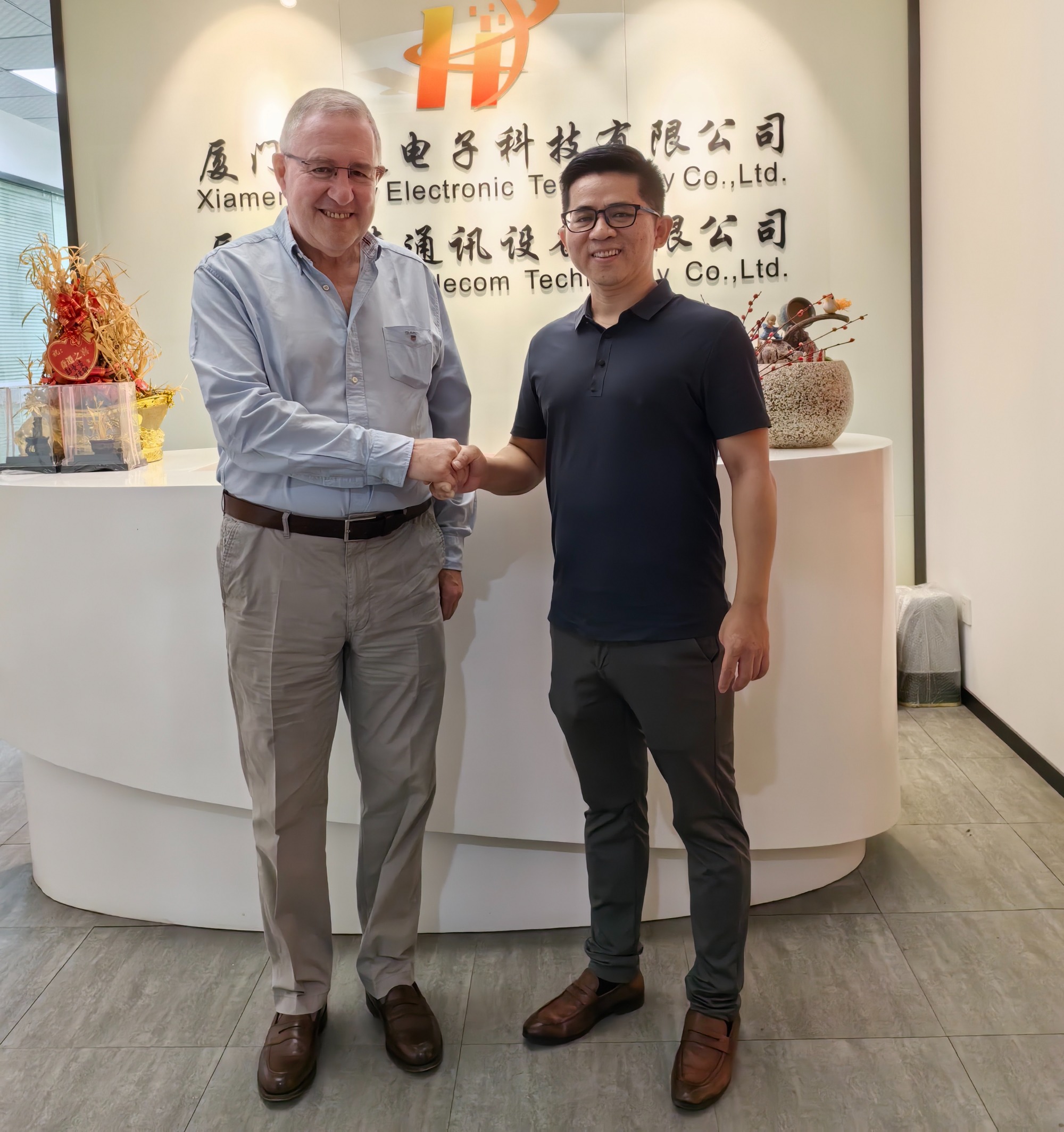 The CEO from UK IoT Connectivity Company Visit Xiamen Honlly for Industrial Router/Mini PC/5G Router Business
 WiFi Chip Prices Rise as WiFi 6 Router Demand Increases
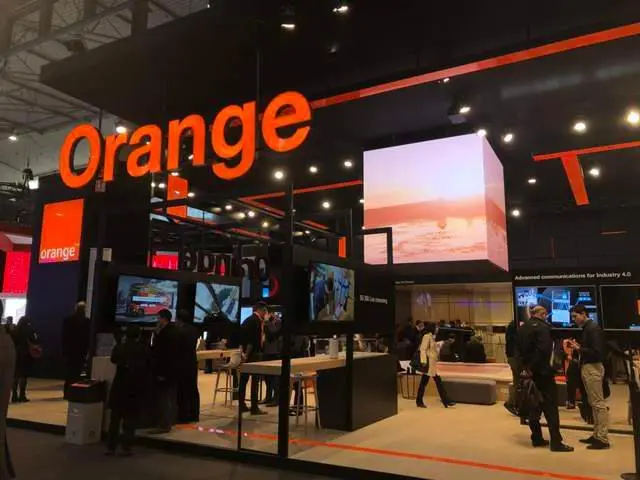 Orange Launches 5G Network in Botswana, Expanding 5G FWA in Africa
